Is Masaya Volcano Still Active?
Masaya is no dormant landmark. A live lava lake, constant gas and full-time monitoring make it one of the few volcanoes you can watch glow from the rim.
Booking Choice: A short private evening visit with a guide and designated-area return transport. Explore Private Masaya Evening From Granada
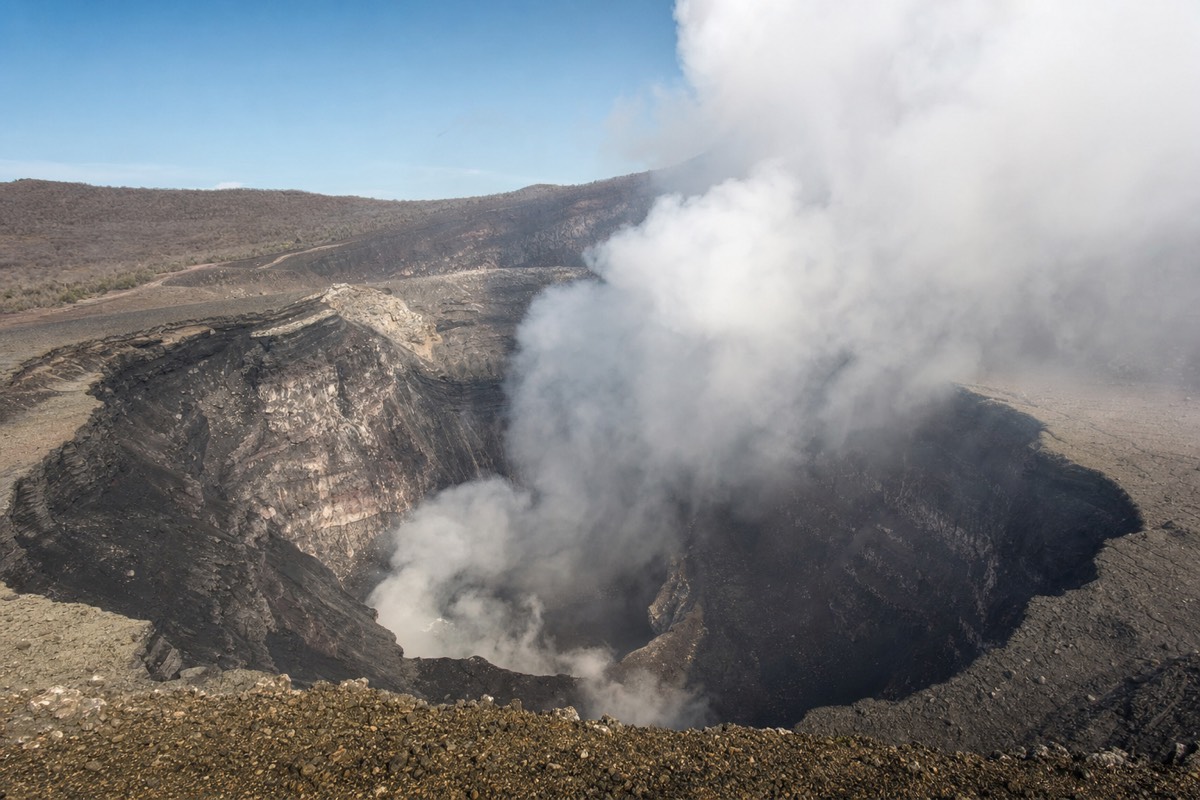
Yes. Masaya is one of Nicaragua's most active volcanoes and among the most active in Central America. Its Santiago Crater holds a persistent lava lake, one of only a handful on Earth, and the volcano vents gas almost continuously. Nicaragua's geological institute, INETER, monitors it closely.
At A Glance: Choose your route and pickup first. A bookable tour does not guarantee park access or a lava view.
Access, visible lava, walking routes and opening hours can change. A scheduled tour is not confirmation of park access. Verify the current itinerary and closure terms before paying; ordinary masks do not filter volcanic gases.
"Active" is not a label on a sign here; you can watch molten rock churn in the crater after dark. Few volcanoes on the planet let visitors reach the rim of a live vent by road, which is exactly what makes this one worth the trip. Every operator listed at Masaya Volcano Tours tracks the volcano's status and reschedules when conditions change, so you are never sent up a closed road.
Is Masaya Volcano Still Active?
Very much so. You can see a gas plume rising from Santiago Crater in daylight and molten lava glowing in the same vent after dark. This is not residual heat from an old eruption; it is an open, degassing system, which is why the park sometimes restricts access when gas readings climb.
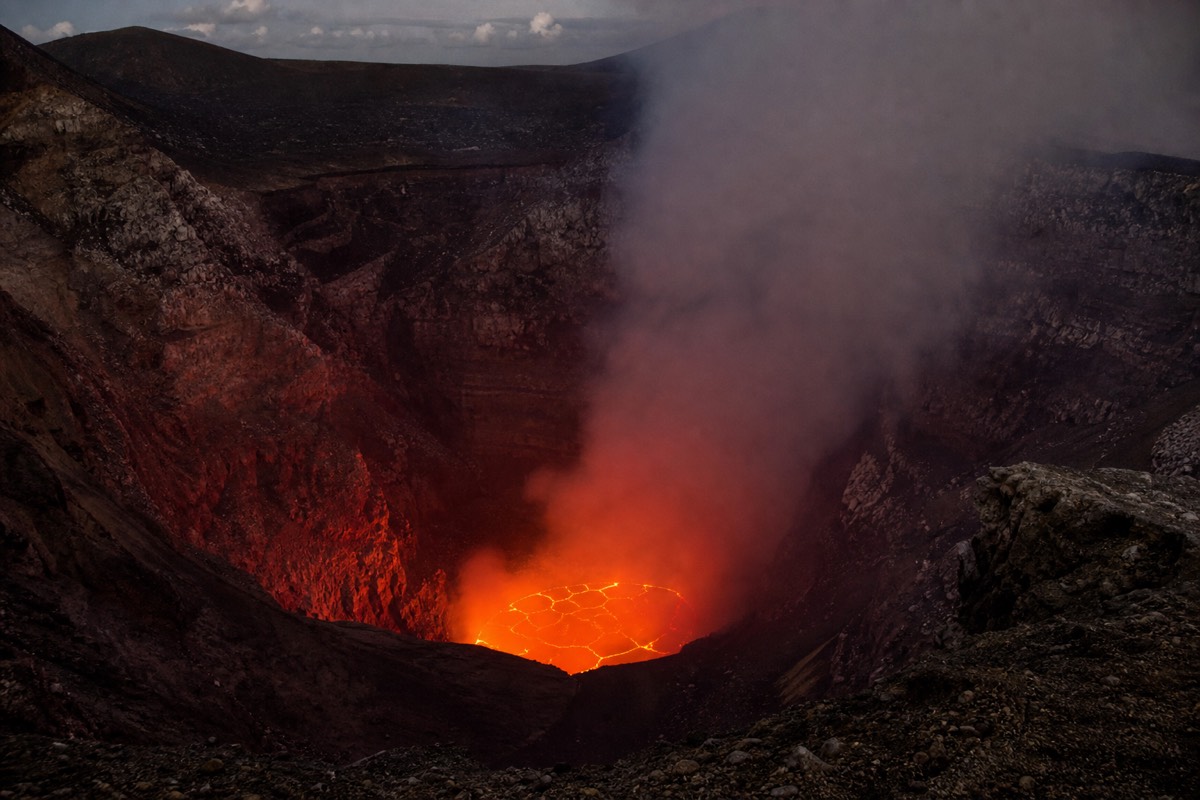
Activity like this puts Masaya in rare company. The lava is close enough to the surface to light the crater at night, and the constant gas output is a live sign of the magma below. That combination, accessible plus genuinely active, is what draws travellers who want more than a scenic overlook.
Accessibility is a big part of the story. The park sits roughly 23 km south of Managua and 14 km west of Granada, so the crater is a short drive from either city, and a road runs almost to the Santiago rim. Alongside the active vent, the park has an interpretive museum, short lava-field trails, the smaller El Comalito vent and a lava-tube bat cave, which means the place stays interesting even on an evening when the lake is quiet.
What Is The Santiago Crater Lava Lake?
Santiago Crater holds one of only a handful of persistent lava lakes on the planet. The molten rock sits down inside the vent and glows deep orange, brightest after dark. It has waxed and waned over the years, sometimes crusting over, sometimes bright and open at the surface.
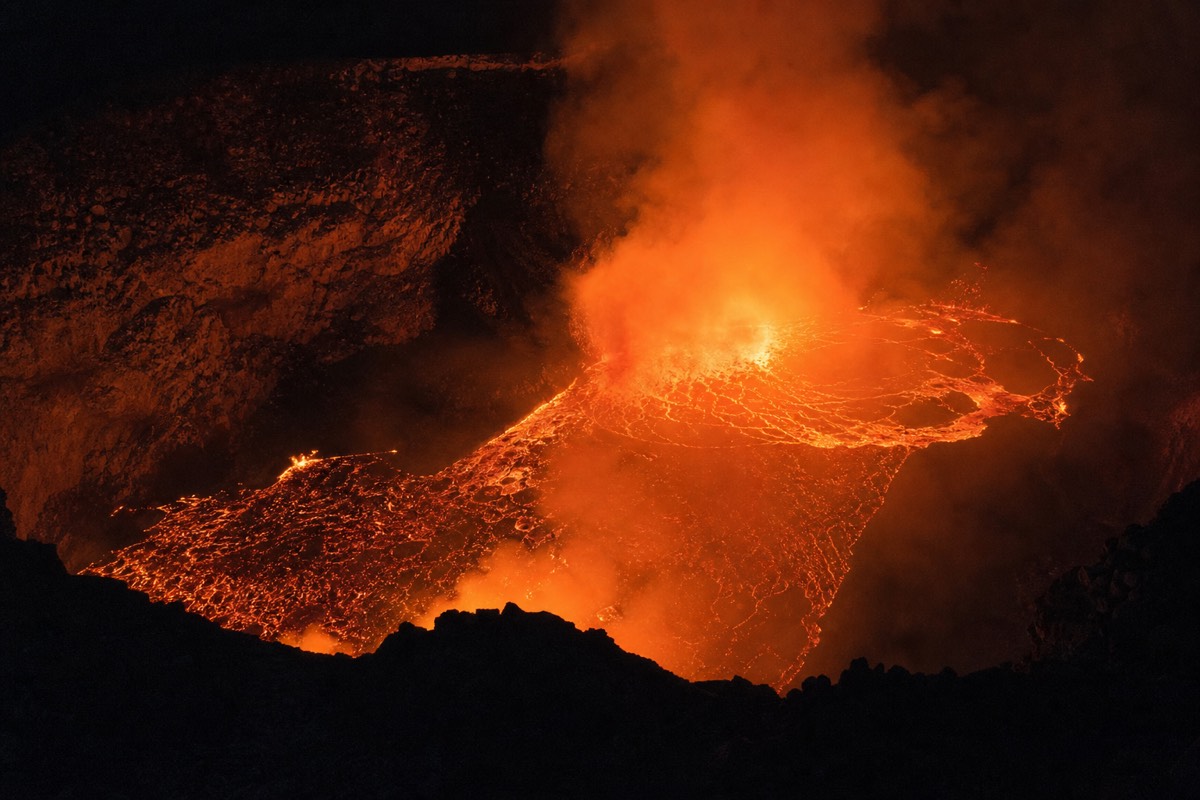
A lava lake this stable is unusual because it needs a constant supply of heat from below, which is why only a small number of volcanoes worldwide sustain one. Masaya's has come and gone over long periods rather than burning steadily forever, so the "is it glowing tonight" question is always worth asking before you go. Because the glow is a night phenomenon, timing decides your view. A midday visit shows mostly a smoking pit; an evening visit shows the color. That is why the night tour to the glowing crater exists, and why a private night lava tour suits travellers who want more time and flexibility at the rim. Be honest with your expectations though: the rim stop is short, usually 5 to 15 minutes, and the lake is not guaranteed to be open on any given night. If you are weighing months, our best time to visit Masaya Volcano guide covers when the glow is most reliable.
How Is Masaya Volcano Monitored?
INETER, Nicaragua's institute for territorial studies, tracks Masaya's gas output, seismic signals and lava activity. When readings shift, park authorities can close the crater road at short notice, and reputable operators reschedule or adapt the itinerary rather than push through.
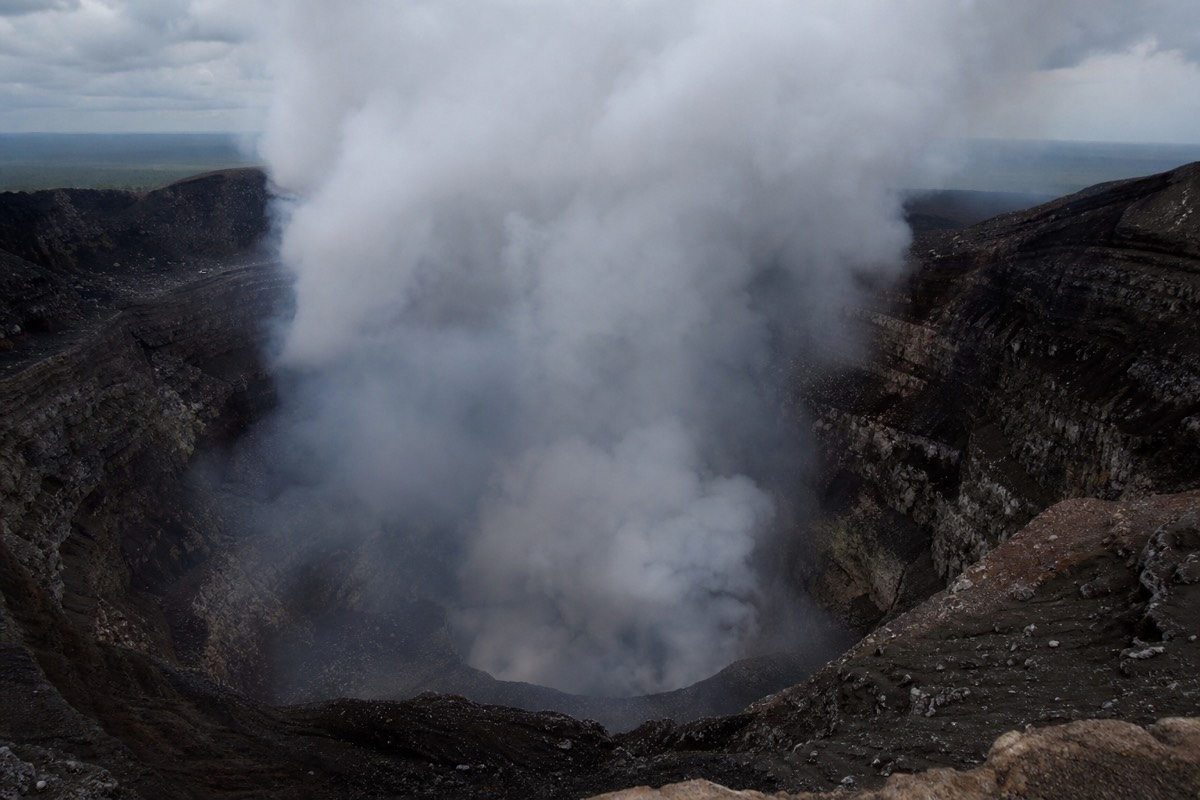
You can check the monitoring body directly through INETER, Nicaragua's geological institute. This matters for planning: access is condition-dependent, not fixed, so the smart move is to book with an operator that watches the status and to keep your plans a little flexible. The trigger for a closure is usually gas rather than lava, since the crater vents sulphur-heavy fumes that authorities cap visitor exposure to. For live opening questions, we keep a running explainer on whether Masaya Volcano is open right now.
Has Masaya Erupted Before?
Yes, over a very long span. The Smithsonian's eruption record for Masaya reaches back thousands of years, and its degassing and lava activity have continued into the present. Spanish colonists were so struck by the glowing pit in the 16th century that they named it the Mouth of Hell and set a cross on the rim.
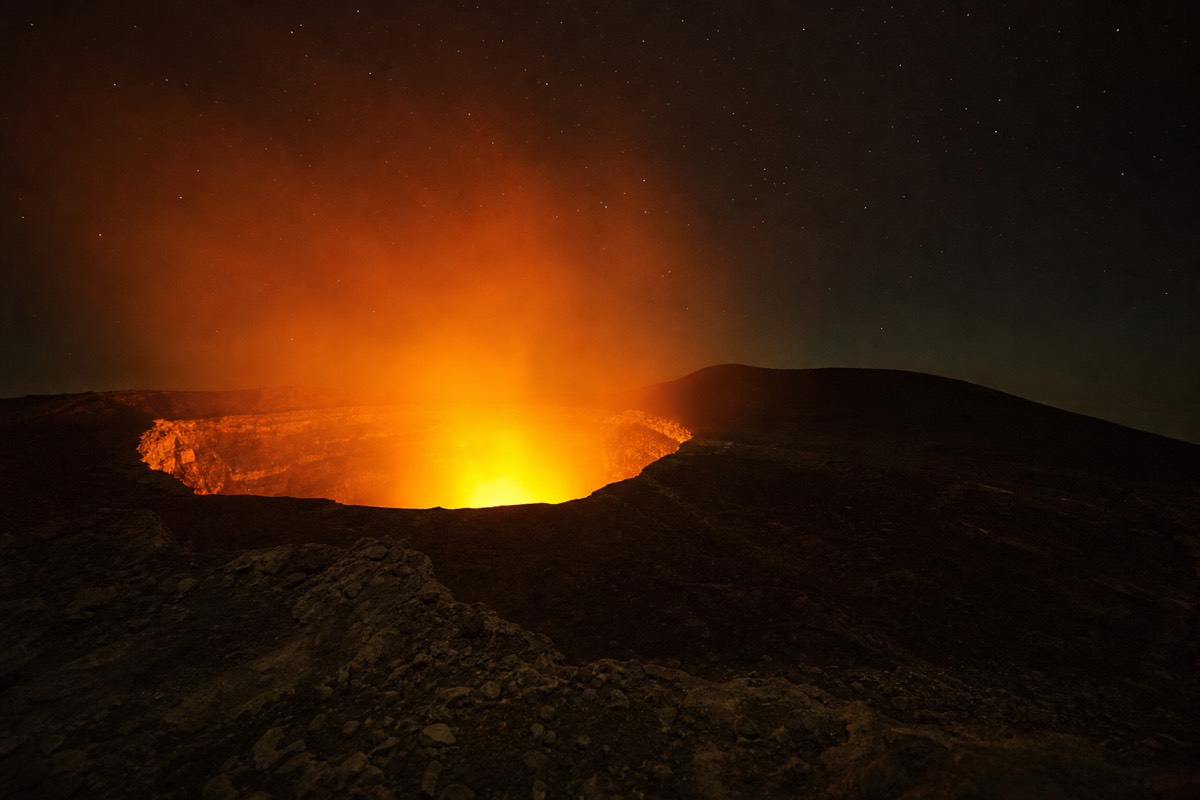
Rather than a single dramatic blast, Masaya's story is one of near-constant, lower-level activity punctuated by stronger phases, with the lava lake appearing and fading across the centuries. The Smithsonian Global Volcanism Program record and the Masaya Volcano reference entry both document that pattern. If you are curious how the vents are laid out, our piece on how many craters Masaya Volcano has maps the caldera.
Is It Safe To Visit An Active Volcano?
A guided visit still involves an active volcano and must follow current access restrictions. The main hazards are volcanic gas and short-notice access limits, both managed by keeping the rim stop brief and closing the road when readings spike. Cars often park facing out as a standard precaution, so a quick exit is always possible.
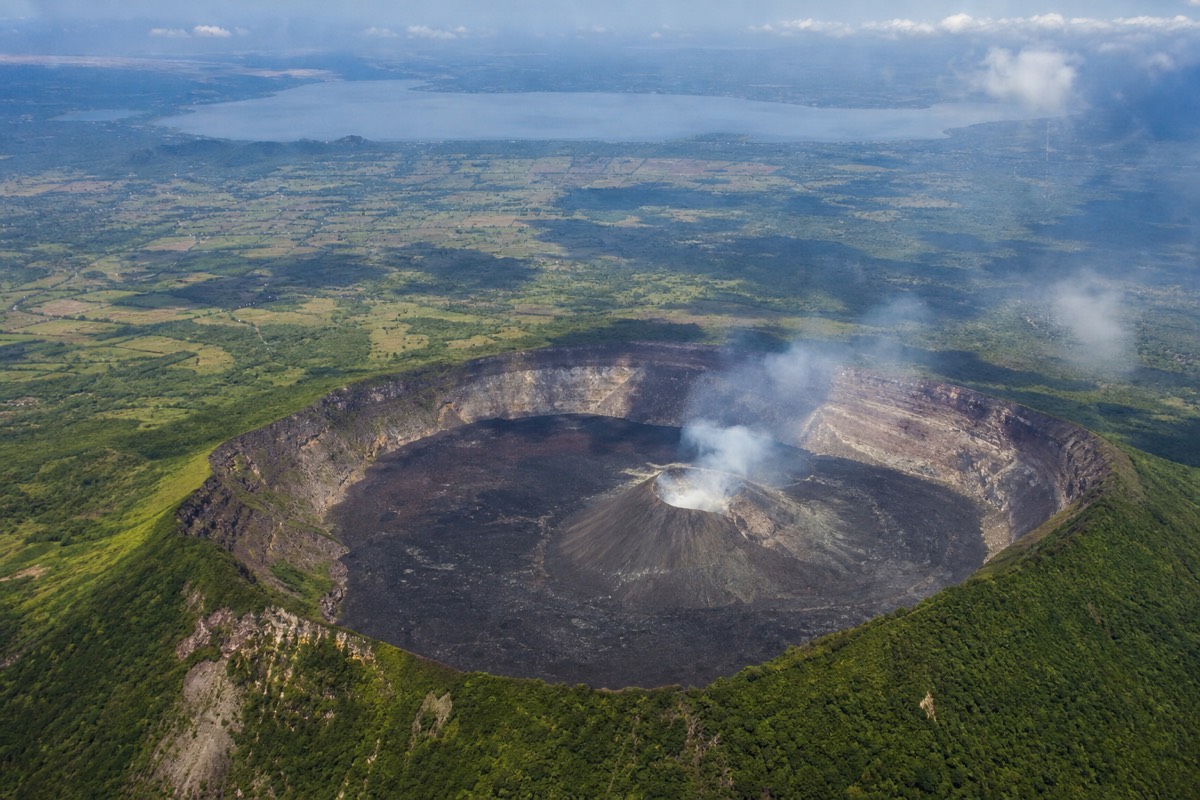
The practical takeaway: go with a guide, follow the park rules, and treat the short rim window as part of the safety design rather than a letdown. People with breathing conditions should be aware of the gas, and everyone should skip the temptation to linger past the guide's signal. Trips that pair the crater with daytime sights, like the full-day art market and white villages tour, spread the experience across a full itinerary, so a brief crater stop never feels like the whole day. For the fuller planning picture, see our Masaya Volcano National Park visitor guide.