Masaya Volcano Hikes & Trails: Craters, Vents & The Bat Cave
The rim overlook is only the start. Inside the caldera there are lava-field paths, a climbable cinder cone, and a bat-filled lava tube, if you know what is open and when a guide is required.
Booking Choice: Combine the volcanic landscape with swimming and kayaking at Laguna de Apoyo. Explore Masaya And Apoyo Kayaking
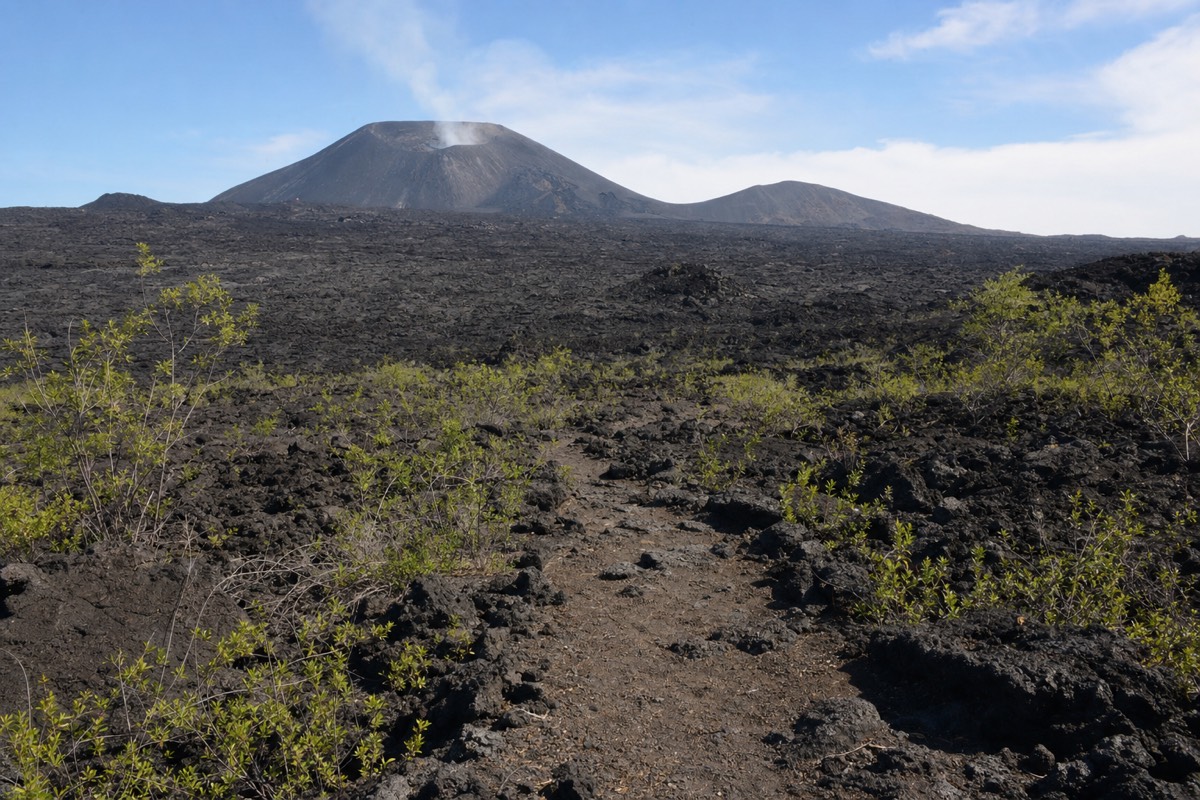
Most people picture Masaya as a single overlook: park the car, take ten steps, and stare into a smoking pit. The reality inside the caldera is bigger. Behind the Santiago Crater rim sits a basin of black basalt holding two volcanoes, five craters, an old cinder cone you can climb, short lava-field paths, and a lava tube where bats stream out at dusk. Some of it you can walk on your own, some only with a guide, and a little of it shuts when the gas gets thick.
At A Glance: A named walking itinerary matters; the bat cave is not included unless explicitly confirmed.
Access, visible lava, walking routes and opening hours can change. A scheduled tour is not confirmation of park access. Verify the current itinerary and closure terms before paying; ordinary masks do not filter volcanic gases.
This is a walking-and-trails guide, not a general planning page. It covers what you can actually hike, how hard each part is, how long to allow, when a guide is required, and the gas-safety rules that shape every visit. Read it next to our complete Masaya Volcano National Park guide and how to visit Masaya from Granada and Managua for the logistics.
Inside the park: the walks, the hours, the honest timings
Caldera size, crater count, entry fee and hours from the park and the site's verified research; the crater-rim stop is genuinely short.
Can You Actually Hike Masaya Volcano?
Yes, though not the way you climb most volcanoes. There is no ash-cone summit push here. Instead you walk short lava-field trails, a small cinder cone called El Comalito, and a lava tube, then look into the guarded Santiago Crater. The paved rim overlook sits a few steps from the car park, so the walking happens on the side trails.
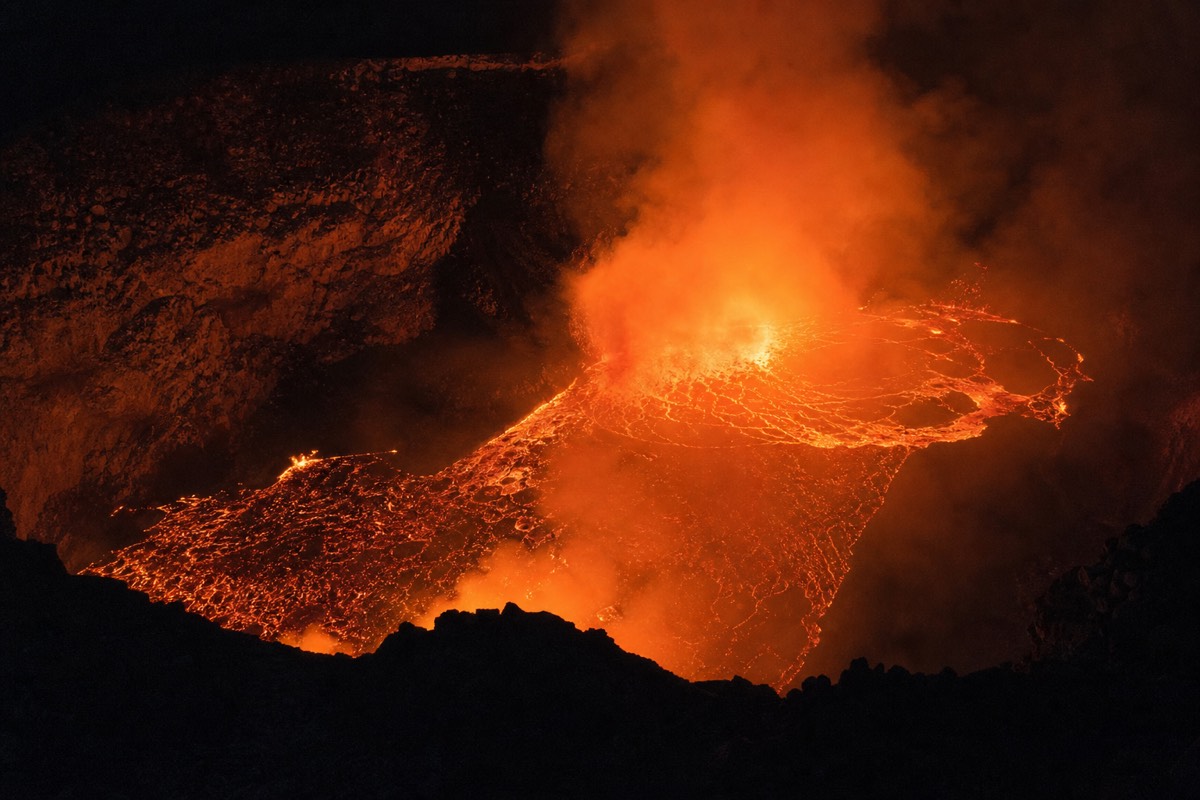
A road runs almost to the crater edge, which is why so many visitors do barely any walking at all. That road access is a gift for anyone short on time or mobility, and a slight letdown for hikers who expected a climb. The trails that do exist are spurs off the main crater area: flat-to-rolling paths over cooled lava, a short scramble up El Comalito, and a guided descent toward the bat cave. None of it is a full-day trek.
Day visits run roughly 9:00 am to 4:45 pm, and a separate evening slot runs about 5:00 pm to 8:00 pm when the lava glow inside Santiago Crater is at its most vivid. Honesty first: the crater-rim stop itself is short, usually five to fifteen minutes, because rangers keep the car park moving and gas can build fast. The trails are what turn a quick photo stop into a real half-day.
Which Trails And Features Can You Walk Inside The Park?
Four things are worth your feet: the Santiago Crater overlook, the short lava-field paths near the craters, the El Comalito cinder cone and vent, and the Cueva del Murciélago lava tube. Add the interpretive museum near the entrance for context. Two of these, El Comalito and the bat cave, are usually done with a guide.
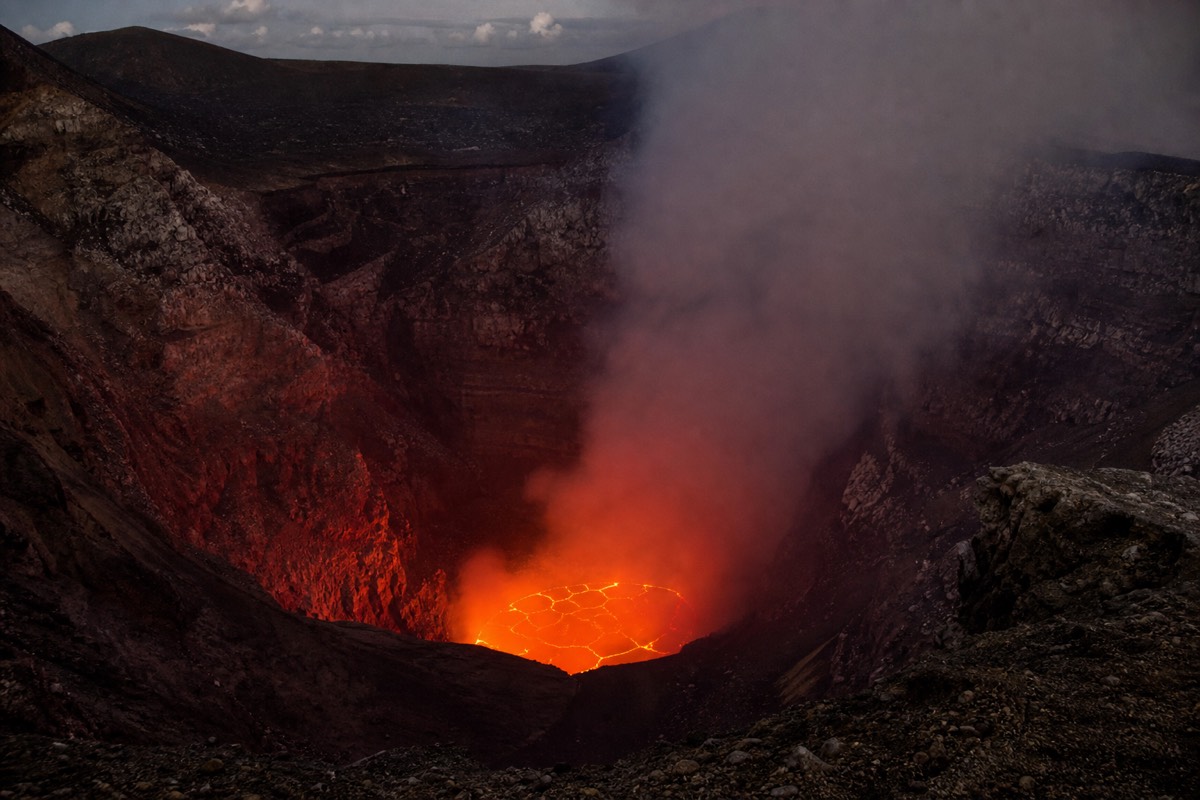
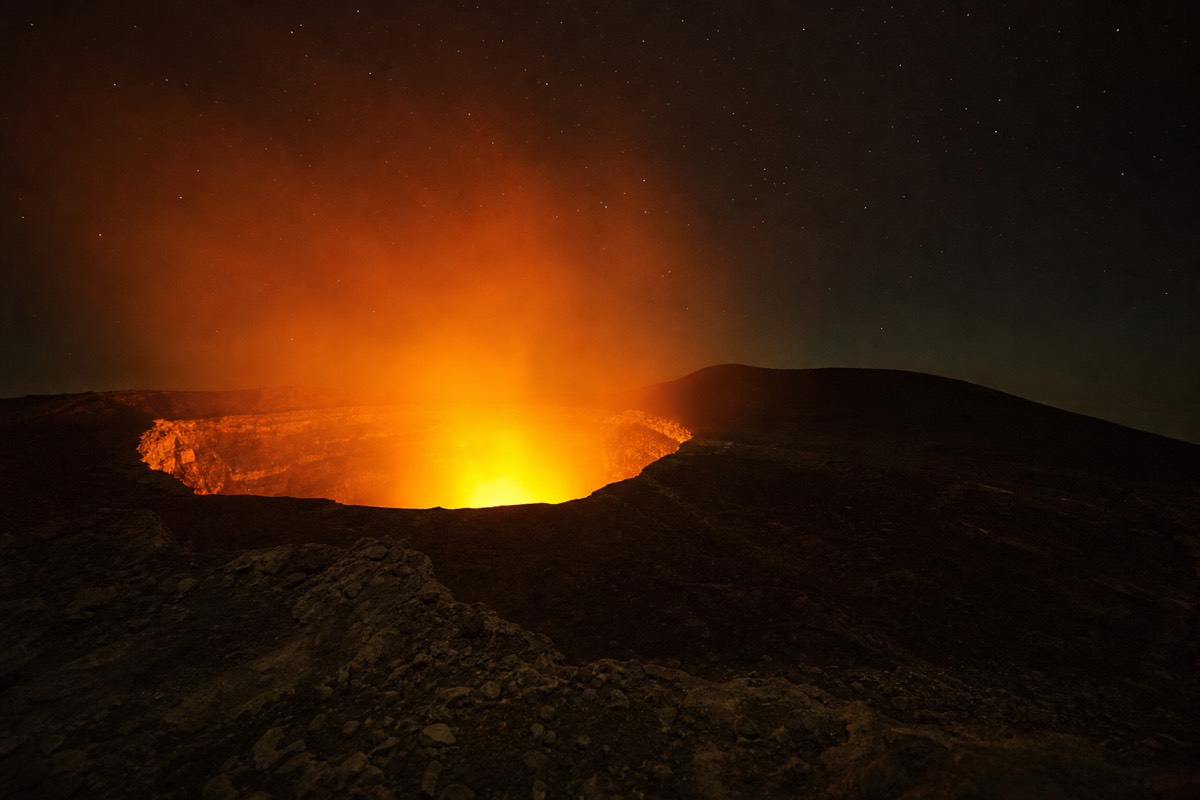
The overlook is the headline. From the paved terrace you look down into Santiago Crater, which holds a persistent lava lake that has kept scientists at the Global Volcanism Program interested for decades. On a clear evening the red glow reflects off the gas plume above the pit, and after dark it is unforgettable, which is why the night tour to the glowing crater is the version most travellers choose.
The lava-field trails thread across old flows near the craters, black rock cracked into slabs and ropes where you can see how the lava cooled. El Comalito is a small cinder cone with a warm, steaming vent, a short uphill on loose ground. The Cueva del Murciélago is a lava tube where bats roost, reached on a guided walk down into the fields. The museum near the gate lays out the geology and the eruption history before you head up.
| Feature | What it is | Effort | Guide needed? |
|---|---|---|---|
| Santiago Crater overlook | Paved terrace above the smoking, lava-holding pit | Very easy, steps from the car park | No, but rangers control time at the rim |
| Lava-field trails | Short paths over cooled black basalt near the craters | Easy to moderate, uneven rock | Often self-guided; a guide adds the geology |
| El Comalito | Small cinder cone with a warm steaming vent | Moderate, a short uphill on loose ground | Usually guided |
| Cueva del Murciélago | Lava tube where bats roost, below the fields | Moderate, dark and uneven footing | Yes, guided only |
| Museum and visitor center | Displays on the caldera, eruptions and the lava lake | Very easy, indoors | No |
How Hard Are The Masaya Trails, And How Long Do They Take?
Nothing here is a serious hike. The overlook is wheelchair-adjacent flat, the lava-field paths are short and rolling over rough rock, and El Comalito is a brief uphill on loose cinder. Plan a half-day in the park to fit the museum, a lava-field walk, a vent or the bat cave, and time at the rim without rushing.
Fitness is rarely the limiting factor; footing and heat are. The lava is abrasive and ankle-turning, the sun is strong, and shade is scarce on the open flows. Most travellers of average fitness manage the walks comfortably at an easy pace, with water and decent shoes. The El Comalito climb is the one section where a little breathlessness is normal, since the ground gives underfoot like coarse sand.
Because the road delivers you to the top, you control how much you walk. A quick visit can be pure overlook and museum. A fuller trip strings together the museum, a lava-field loop, the vent and the bat cave. If you want the walks and the lava glow, note that the daytime and evening slots are separate, so pairing them takes planning around the roughly 9:00-to-4:45 day window and the 5:00-to-8:00 evening window.
| Walk | Fitness needed | Good for | Skip if |
|---|---|---|---|
| Overlook only | Minimal, near-flat and paved | Short on time, limited mobility, families | You wanted a real hike |
| Lava-field loop | Low to moderate | Seeing how the flows cooled up close | You dislike uneven, rocky ground |
| El Comalito vent | Moderate | A short climb and a steaming vent | Loose footing bothers you |
| Bat cave (guided) | Moderate | Lava tubes and wildlife | You are claustrophobic or without a light |
What Is El Comalito, And Can You Climb It?
El Comalito is a small cinder cone inside the caldera with a warm fumarole vent near its top. You can climb it, usually with a guide, on a short but loose uphill. It is one of the few places at Masaya where the ground is visibly hot and steaming, a reminder that the whole basin sits over an active system.
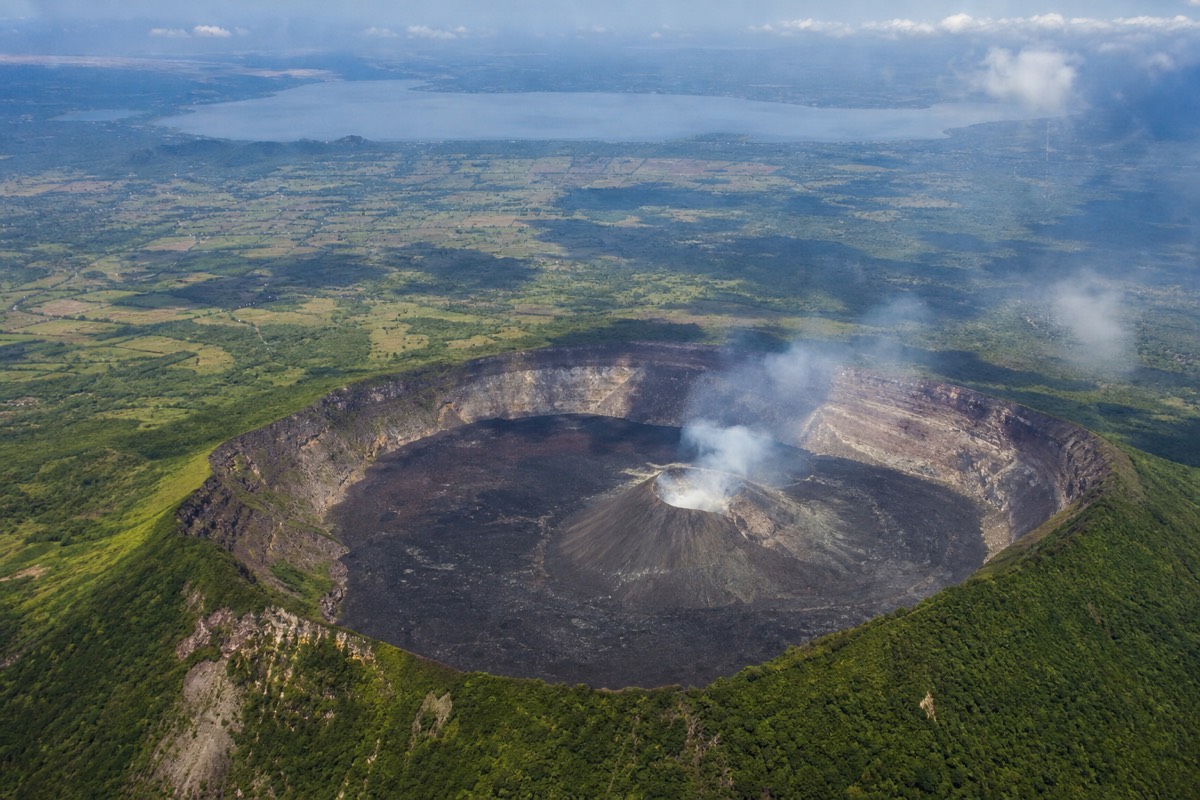
The cone is modest next to the main craters, which is exactly why it is climbable in a few minutes rather than an afternoon. The reward is the vent: cracks in the rock breathe warm, faintly sulfur-scented air, and on cool mornings you can see the steam curl off the ground. Guides often stop here to explain how gas escapes between eruptions and how the caldera keeps venting even when there is no visible lava.
Go up slowly. The surface is loose cinder that slides, so short steps and sturdy shoes matter more than power. Do not put hands or faces close to the vents, and follow the guide's line rather than cutting your own path across fragile ground. If you are curious about the wider geology, the caldera sits on the Cocos Plate subduction zone that feeds this whole stretch of Central American volcanoes.
What Is The Cueva Del Murciélago, The Bat Cave?
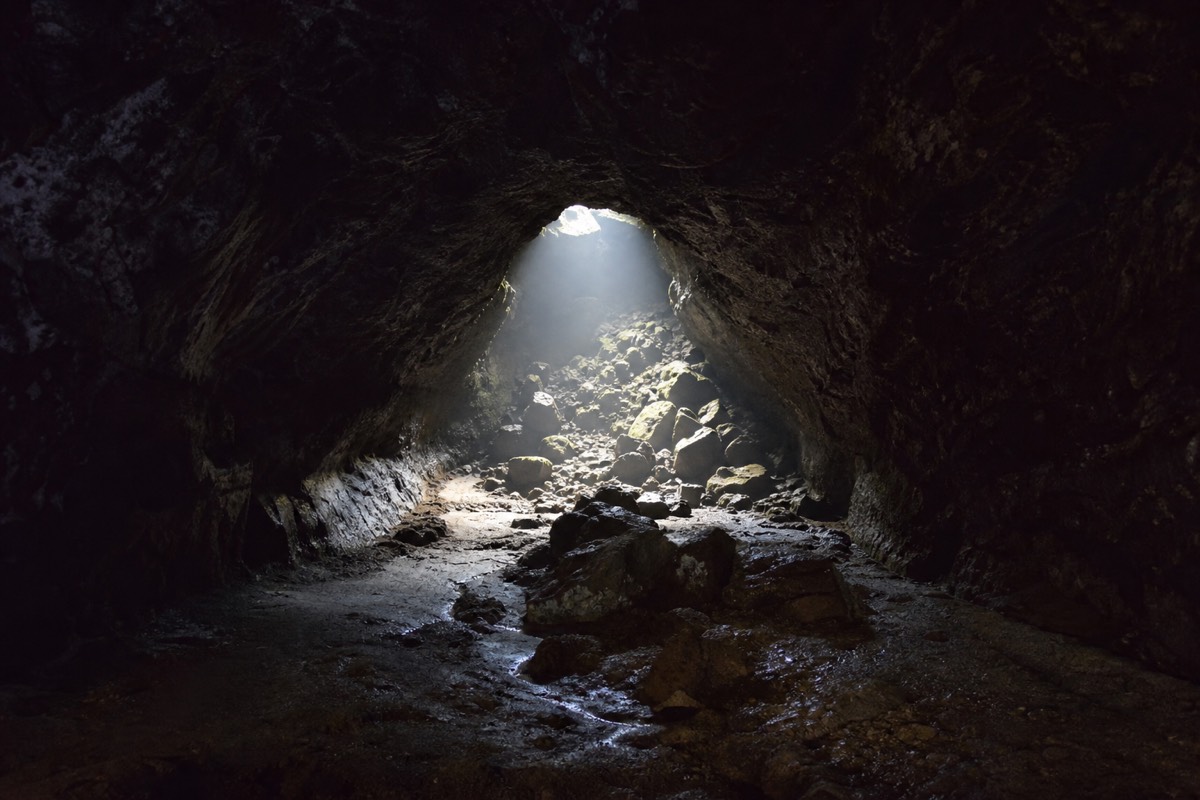
The Cueva del Murciélago is a lava tube beneath the fields where colonies of bats roost. It is a guided-only walk: you descend into a dark, uneven tunnel formed when the surface of a lava flow hardened while molten rock kept draining underneath. Near dusk the bats pour out to feed, which is the sight most visitors come for.
Lava tubes are natural pipes. When a flow crusts over, the still-liquid lava inside keeps moving and eventually empties, leaving a hollow tube. Masaya's is home to bats that shelter in the dark and cool, and a good guide will time the visit so you catch the outflow at dusk without disturbing the roost. Bring a headlamp or torch; phone lights work but leave a hand busy on rough ground.
This is not a show cave with railings and lighting. Footing is uneven, the ceiling dips, and you follow the guide closely. It pairs naturally with a lava-field walk on the full-day art market and white villages tour, which builds in park time alongside the craft markets, or with the evening slot if your operator runs the cave then. If you are weighing whether the whole park earns a visit, our take on whether Masaya is worth visiting lays out the case.
What Can You Hike, And What Is Off-limits?
You can freely walk the overlook, the museum area and marked lava-field paths. El Comalito and the bat cave are done with guides. You cannot descend into any crater, cross closure barriers, or wander off-trail across unstable ground, and the entire park can close at short notice when gas or activity spikes.
The rules are less about bureaucracy than about a live volcano that changes by the hour. Sulfur dioxide from the lava lake can surge, and when it does the rangers pull everyone back from the rim or shut the upper road entirely. That is normal here, not a sign of disaster, and it is why reputable operators build flexibility into the day. Before you commit, it is worth checking whether the park is open right now.
| Activity | Allowed? | Notes |
|---|---|---|
| Standing at the paved overlook | Yes | Rangers cap time at the rim on busy or gassy days |
| Walking marked lava-field trails | Yes | Stay on the path; the rock is sharp and unstable off-trail |
| Climbing El Comalito | Usually, with a guide | Loose footing; keep clear of the vents |
| Entering the bat cave | Guided only | Bring a light; expect dark, uneven ground |
| Descending into a crater | No | Off-limits everywhere in the park |
| Being at the rim during high gas | No | Rangers close the rim or the road until it clears |
Guided Or Self-guided: Which Gets You More From The Trails?
You can drive in and walk the overlook and lava fields yourself. A guide can add interpretation and organize the stops that are open and explicitly included. The verified museum-and-El-Comalito itinerary does not list a bat-cave visit. For the trails specifically, a guide does not override closures or guarantee access to a named trail.
Self-driving suits confident, independent travellers with a car and flexible time. You pay the gate fee, roughly four to five US dollars, park at the top, and explore the open areas. What you miss is the guided-only ground and the local read on gas conditions and closures. The rim stop stays short either way, since that limit is about safety, not your itinerary.
A guided trip trades the driving for access and timing. The exact booking option determines pickup, entry fees and the itinerary. If you want the after-dark glow, the night tour to the glowing crater is built around it, while the full-day options weave the walks into markets and villages. For a slower, water-and-trail day you can also add the Apoyo Lagoon kayaking day. Prices below are indicative starting points from the operators' listings; check the live listing for today's price.
| Factor | Self-drive | Guided tour |
|---|---|---|
| El Comalito and the bat cave | Limited or closed to you | Only if explicitly included in the booked itinerary |
| Lava-glow timing | You manage the evening slot yourself | Scheduled for the strongest glow |
| Gas and closure calls | On you to judge | Local operator reads conditions |
| Transport and fees | Your car, your gate fee | Pickup and entrance handled |
| Cost | Fuel plus about the current provider quote entry | From the current provider quote, check the live listing |
Is It Safe To Hike Here? Gas, Footing And The Rules
Masaya is safe to visit when you follow the rangers, but it is a genuinely active volcano, so the risks are volcanic gas, sharp unstable rock, and strong sun rather than crime. Sulfur dioxide can irritate eyes and lungs, footing on lava is treacherous off-trail, and closures happen with little warning when activity rises.
The gas is the main thing to respect. When the plume from Santiago Crater blows toward the overlook, the sulfur bites, and rangers move people back or close the rim. If you have asthma or a heart or lung condition, keep your distance on gassy days and carry any inhaler. Rangers cap rim time partly for this reason, so a short stop at the edge is normal, not you being hurried unfairly.
Underfoot, treat the lava with respect: it is abrasive enough to shred a fall, and cavities and thin crust lurk off the marked paths. Stay on trail, keep children close, and do not climb barriers for a photo. INETER, Nicaragua's geological institute, monitors the volcano, and the park adjusts access to what the mountain is doing. For the fuller picture, see how safe a Masaya visit is and pick the calmest window using the best time to see the lava glow.
What Should You Bring To Hike Masaya Volcano?
Pack closed shoes with grip, water, sun protection, and a light for the bat cave. The lava is sharp, shade is thin, and the tube is dark, so those four items cover most of the discomfort. Add a light layer for the evening slot. A bandana does not protect against volcanic gases.
Footwear does the heavy lifting. Trainers or hiking shoes with a real sole handle the rock far better than sandals, which the lava will chew. Sun is relentless on the open fields, so a hat, sunglasses and sunscreen matter even on a short walk. Carry more water than you think you need; there is little for sale up top, and the heat off the black rock is deceptive.
For the bat cave, a headlamp keeps both hands free on uneven ground, though a phone torch works in a pinch. Evenings can cool quickly once the sun drops, so a thin layer is welcome on the night slot. Do not rely on a cloth for gas protection. Follow the park’s current rules on equipment and access.
| Item | Why it matters |
|---|---|
| Closed shoes with grip | Lava rock is sharp and uneven; sandals get shredded |
| Water, more than you expect | Strong sun and heat off the black rock; little sold up top |
| Hat, sunglasses, sunscreen | Almost no shade on the open flows |
| Headlamp or torch | The bat cave is dark with uneven footing |
| Light layer for evening | The rim cools fast after sunset on the night slot |
| Cloth or bandana | Not protection against volcanic gases; move away from the plume |
How Do The Masaya Trails Fit A Wider Nicaragua Trip?
Treat Masaya as a half-day anchored on the walks and the lava glow, then build outward. Granada, about 14 km east, is the natural base, with the Laguna de Apoyo crater lake nearby for swimming and the markets and white villages close by. For adrenaline, volcano boarding at Cerro Negro is a separate day trip from the León side.
A tidy plan pairs a Masaya trail visit with something slower or wilder. Do the lava fields and vent in the afternoon, then stay for the evening glow, or split the day and add a morning swim at the Laguna de Apoyo crater lake before an evening at the rim. The craft markets and Pueblos Blancos sit between Granada and the volcano, so a full day can cover walks, shopping and villages without much backtracking.
If you want a bigger volcanic hit, Cerro Negro near León is Central America's youngest volcano and the only place set up for volcano boarding, a different mountain and a different day. Masaya rewards curiosity over stamina: it is where you read a live caldera up close, then let the region's lakes, colonial streets and younger volcanoes fill the rest of the trip.