Masaya Volcano National Park: Complete Visitor Guide (2026)
Few places let you drive almost to the edge of an active crater and look down into a glowing lava lake. Masaya does. Here is how to plan the visit: hours, fees, what to see, and how to time it so the glow is at its best.
Booking Choice: A short private evening visit with a guide and designated-area return transport. Explore Private Masaya Evening From Granada
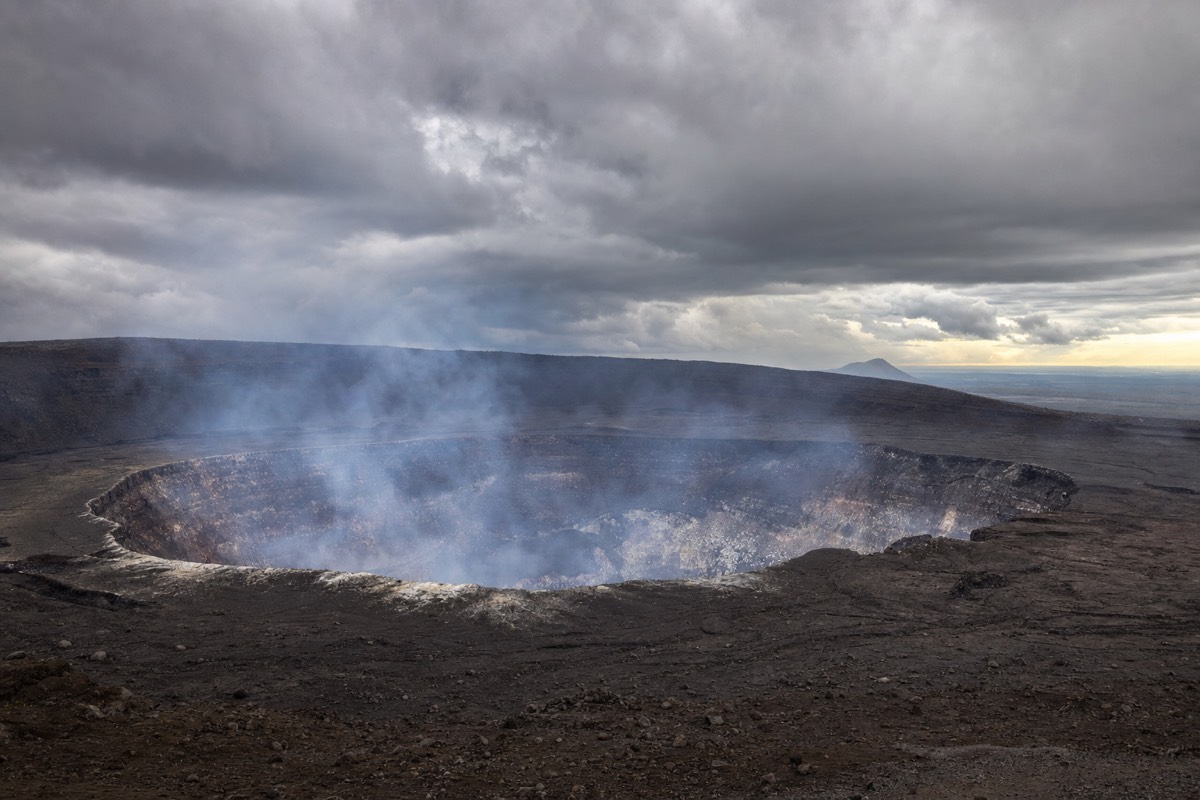
Masaya Volcano National Park at a glance
At A Glance: Choose your route and pickup first. A bookable tour does not guarantee park access or a lava view.
Distances, hours and the gate fee are planning figures; the operator confirms current hours and rates on the day.
What Is Masaya Volcano National Park?
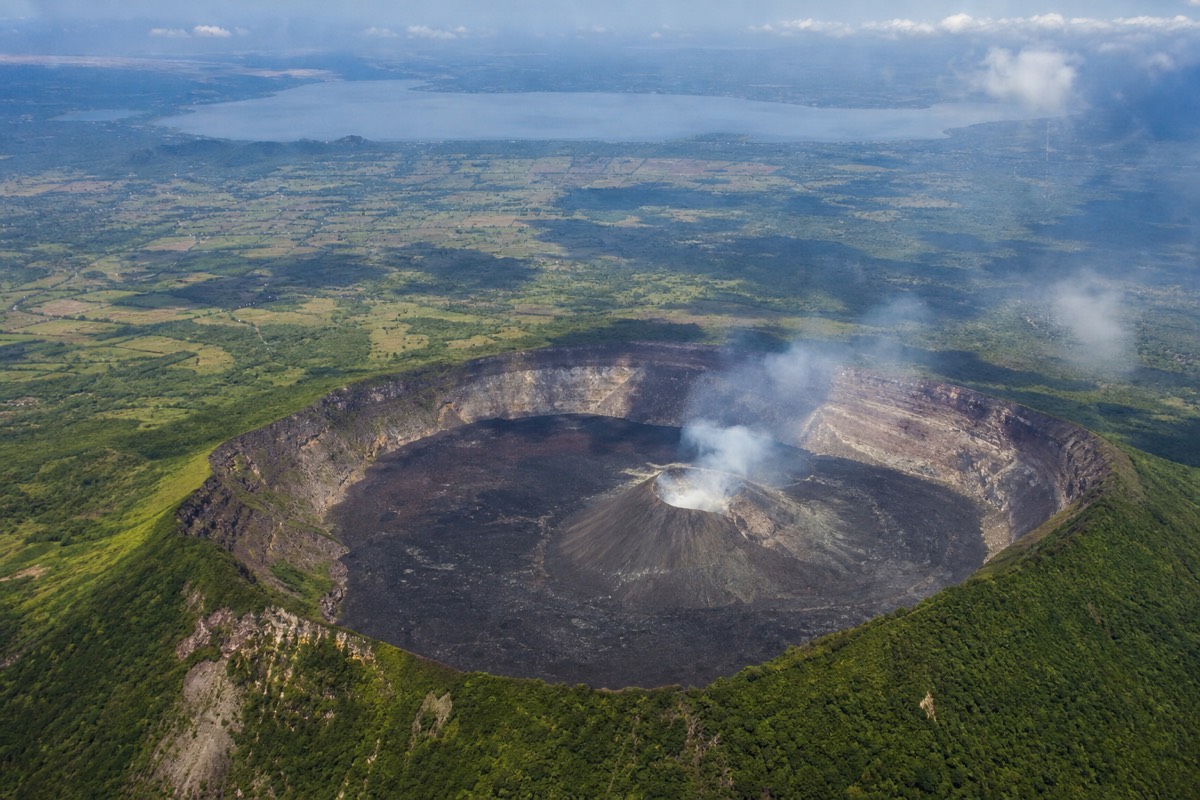
Masaya Volcano National Park is a 54 square kilometre basaltic caldera about 23 km south of Managua and 14 km west of Granada, holding two volcanoes and five craters. Its Santiago Crater contains a persistent lava lake, one of only a handful on the planet, and that molten glow after dark is the reason most people come.
Access, visible lava, walking routes and opening hours can change. A scheduled tour is not confirmation of park access. Verify the current itinerary and closure terms before paying; ordinary masks do not filter volcanic gases.
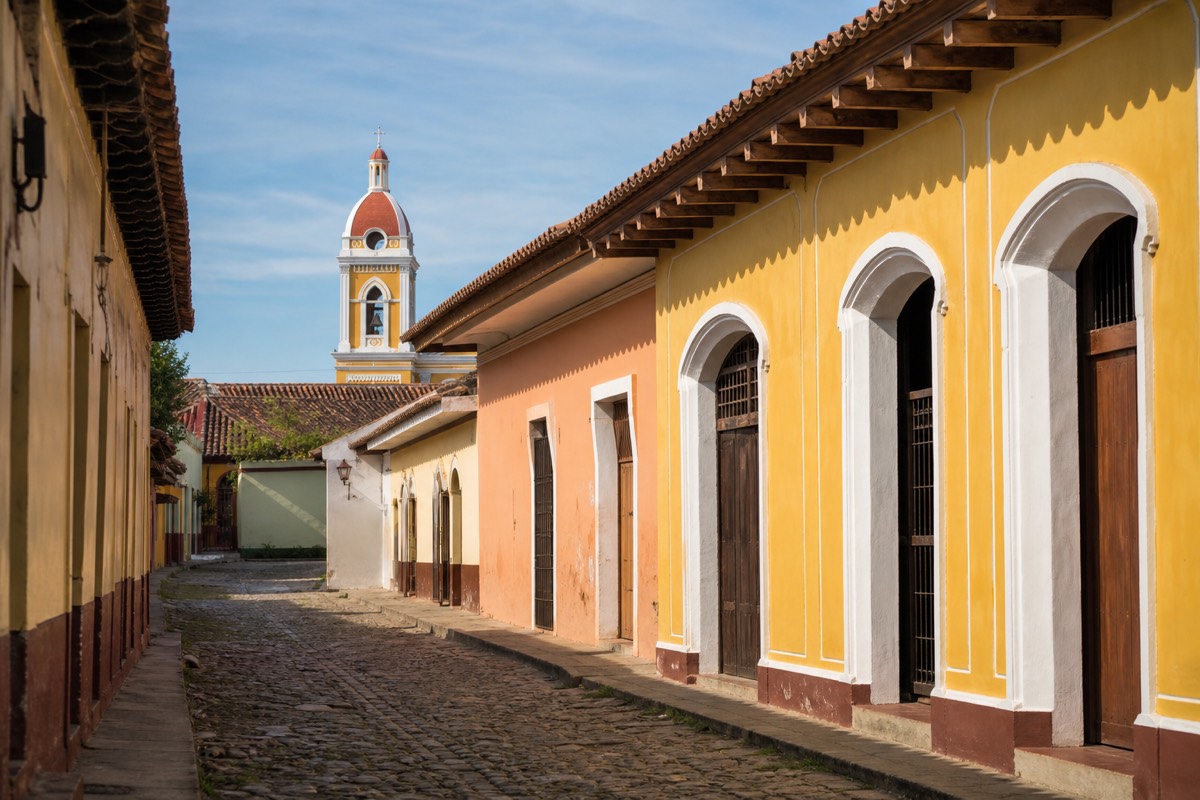
The park was Nicaragua's first protected area, and it sits on the Central American Volcanic Belt, the chain of volcanoes fed by the subduction of the Cocos Plate beneath the region. Two overlapping volcanoes, Masaya and Nindiri, share the wide caldera floor, and their vents have opened and sealed over centuries.
Spanish colonists in the 16th century were unsettled enough by the fire in the ground to name it La Boca del Infierno, the Mouth of Hell, and a friar planted a cross on the rim, the Cruz de Bobadilla, to hold the demons back. That history is a big part of why it is famous, along with the rare fact that the lava is still there today. If you are curious about the geology, how many craters the caldera holds is a short read on its own.
The exact booking option determines pickup, entry fees and the itinerary.
| Fact | Detail |
|---|---|
| Area | ~54 km2 basaltic caldera |
| Volcanoes / craters | 2 volcanoes, 5 craters |
| Star feature | Santiago Crater active lava lake |
| From Granada | ~14 km, roughly 30 to 40 minutes |
| From Managua | ~23 km, roughly 45 minutes |
| Gate fee | Around the current provider quote at the entrance (check the current rate) |
| Best light for lava | After dark on the evening visit |
What Are The Opening Hours, And When Should You Go?
Day visiting hours run roughly 9:00 am to 4:45 pm, and a separate short evening window runs about 5:00 pm to 8:00 pm. The night slot is the one worth planning around, because the lava lake only reads as a vivid orange glow once the sky is dark. Hours can shift, so the operator confirms them on the day.
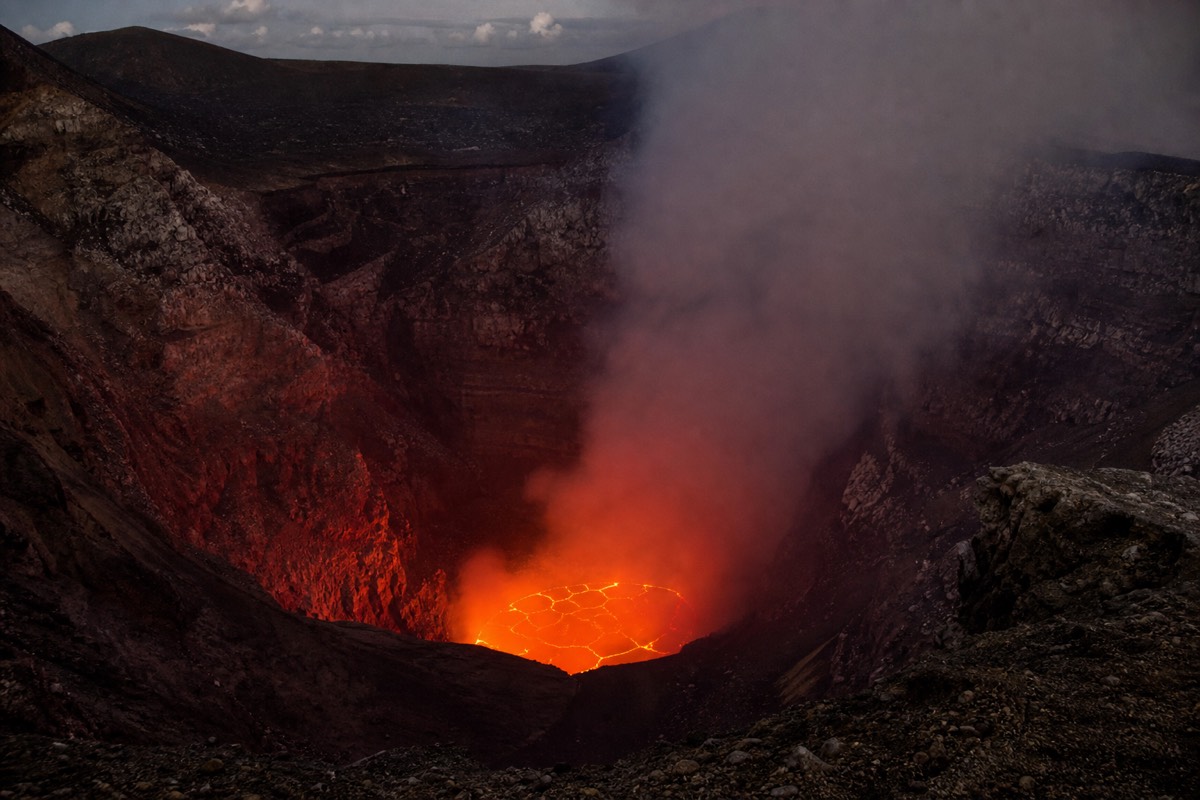
In daylight you get the scale of the caldera, the smoking vent, and clear views across the lava fields, but the crater itself looks like a grey, gassy pit. After sunset the same pit turns molten. Check your actual date before arranging the rest of your day.
Two more things about hours. First, the park sometimes caps how long each vehicle can park at the rim during the busy evening slot, which keeps traffic moving. Second, access can pause with no notice when gas or activity rises, so a flexible plan beats a rigid one. For the full logistics of timing your arrival, see how to reach the crater from Granada and Managua.
| Window | Approx. hours | What you see |
|---|---|---|
| Day visit | ~9:00 am to 4:45 pm | Caldera scale, vents, lava fields, museum, trails |
| Evening / night visit | ~5:00 pm to 8:00 pm | The lava-lake glow at its most vivid |
How Much Does It Cost To Visit?
Budget for the current park entry charge and transport. The private Masaya night visit includes volcano entry; the Apoyo combination lists it separately. Compare the exact option and pickup area before deciding what offers better value.
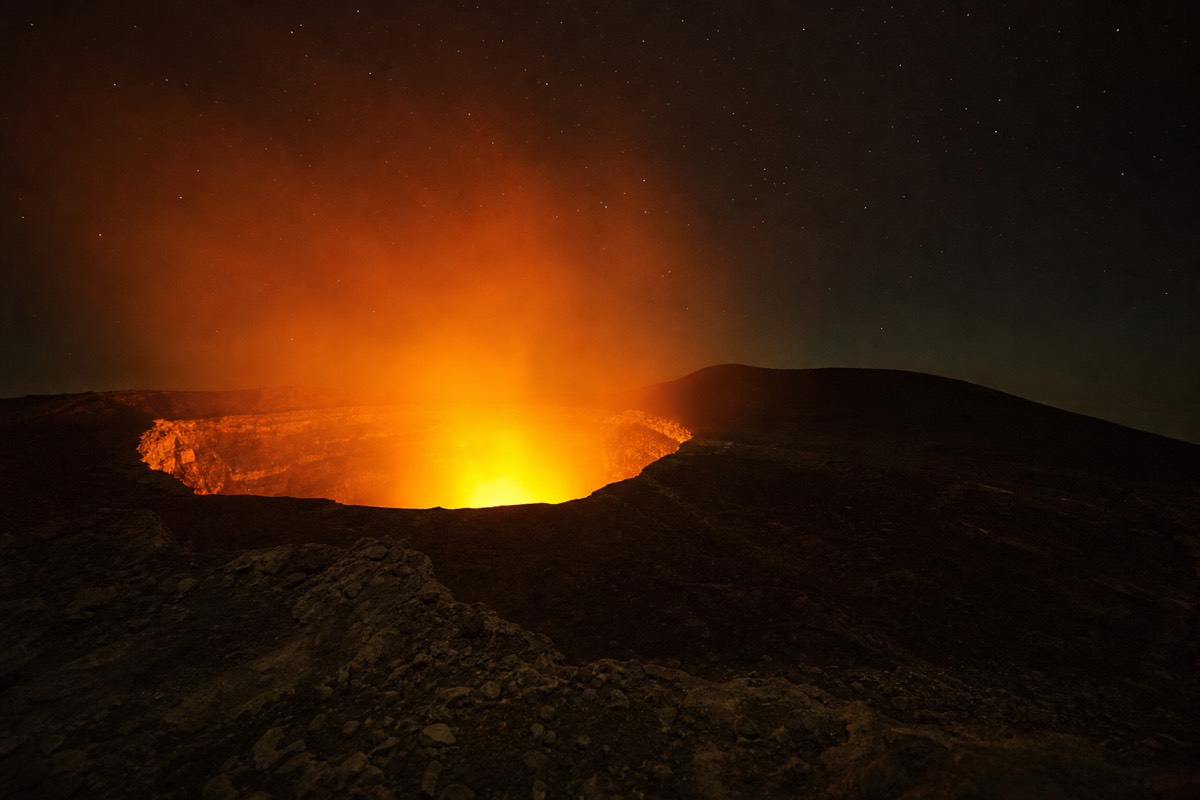
Here is the honest cost picture. The gate fee is small. The real cost is getting there and back, especially after dark when public transport thins out and taxis charge a premium for the round trip and the wait. A guided evening tour folds transport, entry, and timing into one number, which is why most visitors book one rather than piece it together.
Guided prices sit in a clear ladder. The private evening trip is the entry point, a private version costs more for the smaller group and flexible pacing, and the full-day options bundle the crater with markets, villages, or a crater lake. Every figure below is a starting price, so check the live listing for today's rate and any seasonal changes.
| Cost item | Typical amount | Notes |
|---|---|---|
| Park gate fee | the current provider quote per person | Usually included with a guided tour |
| Private evening tour | From the current provider quote | Transport, entry and guide bundled |
| Private evening tour | From the current provider quote | Smaller group, flexible pacing |
| Full-day combination | From the current provider quote | Adds market, villages or a crater lake |
Day Visit Or Night Visit: Which Is Better?
For most travellers the night visit wins, because the glowing lava lake is the whole point and it only shows after dark. A daytime visit is better if you want to hike the trails, spend time in the museum, or photograph the caldera in full light. The ideal plan for many is a full day that ends at the rim as the sky goes dark.
The daytime experience is calmer and more educational. You can walk the lava fields, climb the small El Comalito vent, and read the caldera the way a geologist would. The trade-off is that the crater looks like a smoking grey hole rather than a lake of fire.
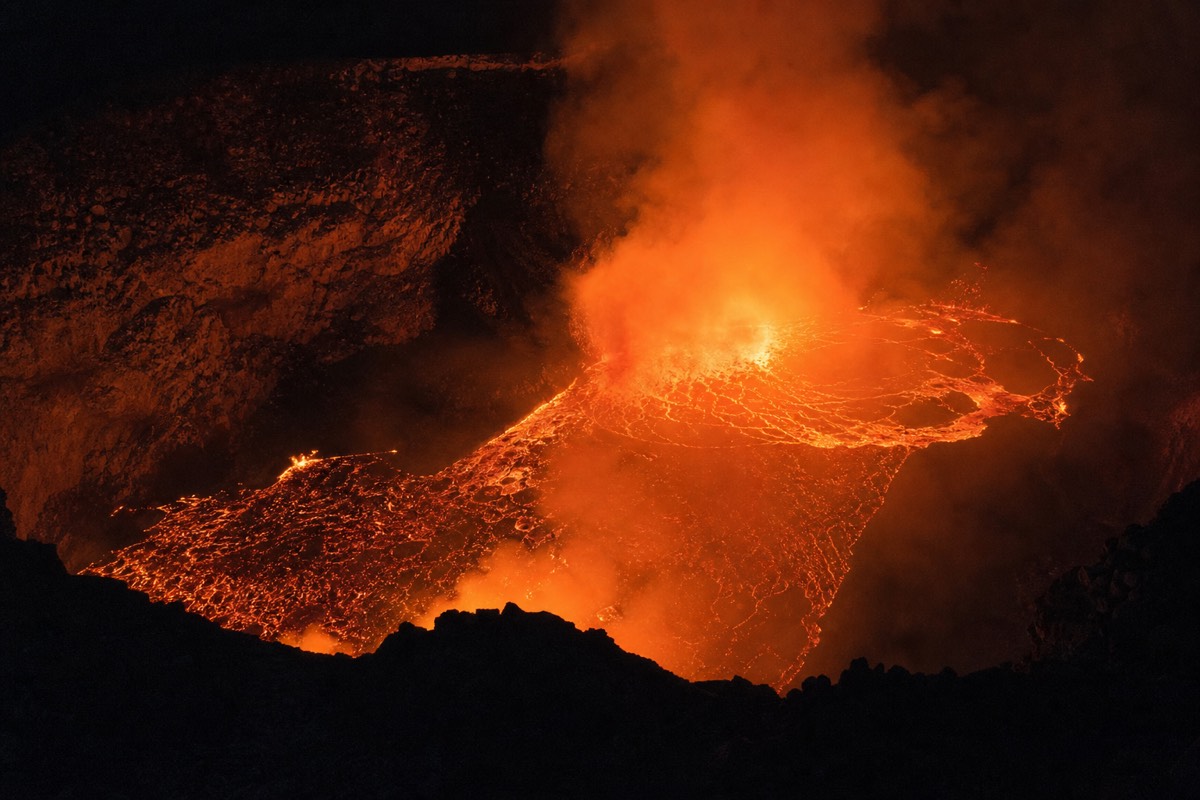
The evening experience is pure spectacle. You drive up to the rim, and there it is: molten orange moving in the dark. Be honest with yourself about the pacing, though. The rim stop itself is short on most tours, roughly 5 to 15 minutes, partly for gas safety and partly to rotate vehicles through. That is plenty of time for the view and photos, but it is not a long, lingering vigil. If seeing the lava is your priority, book the night tour to the glowing crater, or step up to a private night lava tour for a smaller group.
| Factor | Day visit | Night visit |
|---|---|---|
| Lava glow | Not visible (grey, gassy pit) | Vivid orange glow, the main draw |
| Trails and museum | Open and worthwhile | Limited, focus is the rim |
| Rim time | Flexible in daylight hours | Short, about 5 to 15 minutes |
| Crowds | Lighter | Busier in high season |
| Best for | Hikers, photographers of the caldera | Anyone who wants to see live lava |
What Is The Santiago Crater Lava Lake?
The Santiago Crater is the active vent inside the caldera, and it holds a persistent lava lake, a rare pool of exposed molten rock that stays liquid for long stretches. Only a handful of volcanoes worldwide keep one, which is what makes Masaya so unusual: you can look straight down at moving lava from the rim.
According to the Smithsonian Global Volcanism Program, Masaya has hosted a lava lake through repeated active periods, and its incandescence has been visible from the rim during those spells. The lake rises, falls, crusts over, and reopens, so how much molten surface you see varies from visit to visit, and no honest operator promises a fixed view.
The gas it releases is real and constant. That sulphur-dioxide plume is why the rim stop is kept short and why the park closes the crater when levels climb. It also means the view can be partly veiled by fume on a bad-wind day. When the lake is high, the wind is kind, and the sky is dark, it is one of the most direct encounters with live geology anywhere on Earth. To read how reliably that lines up, check the best time of year to see the lava.
What Else Is Inside The Park?
Beyond the star crater, the park packs in an interpretive museum, the smaller El Comalito vent, short lava-field trails, several viewpoints, and the Cueva del Murcielago, a lava-tube bat cave. A daytime or full-day visit lets you fit these in, while the pure night trip usually goes straight to the rim.
The visitor center and museum explain the geology, the eruption history, and the local ecology, including the parakeets that nest in the gassy crater walls, an oddity for birds that would normally avoid the fumes. It is a good first stop to make sense of what you are looking at.
El Comalito is a small secondary cone you can walk up, with fumaroles venting warm gas from the ground. The lava-field trails cross old flows that are still bare and black. The bat cave is a collapsed lava tube where thousands of bats roost, usually visited on a guided walk. If hiking is your main interest, the dedicated rundown of the park's hikes and trails covers routes, timing, and which need a guide.
| Feature | What it is | Best on |
|---|---|---|
| Museum / visitor center | Geology, history and ecology exhibits | Day visit |
| El Comalito | Small vent cone with fumaroles | Day / full-day |
| Lava-field trails | Walks across old black flows | Day / full-day |
| Cueva del Murcielago | Lava-tube bat cave (guided) | Day / full-day |
| Santiago Crater rim | The active lava-lake viewpoint | Night visit |
Is It Safe To Visit, And How Is The Volcano Monitored?
The park manages access around volcanic gas and activity, but no guided visit is risk-free. The main hazard is the sulphur-dioxide plume, so the rim stop is kept short and the crater closes when levels rise. Nicaragua's institute, INETER, monitors the volcano, and reputable operators reschedule when conditions demand it.
The volcano is watched continuously by INETER, which tracks gas output, tremor, and lake behaviour. When readings climb, park authorities restrict rim access at short notice. Access controls reduce exposure; they do not guarantee a risk-free visit. It also means a fixed self-drive plan can hit a closed gate, whereas itinerary changes or rebooking depend on your purchased option’s terms.
Sensible precautions help. People with asthma or heart conditions should be cautious near the plume, everyone should follow the guide's timing at the rim, and you should not wander off the marked areas. For a fuller treatment, we cover whether it is safe to visit the crater and whether the park is open right now on separate pages, since status changes with conditions.
How Do You Get To The Park?
The park entrance sits about 14 km from Granada, roughly a 30 to 40 minute drive, and about 23 km from Managua, roughly 45 minutes. Managua's Augusto C. Sandino International Airport is 30 to 45 minutes away. Most visitors arrive on a guided tour with hotel pickup, which removes the timing and transport puzzle, especially for the night slot.
From Granada, the drive is short and straightforward, which is why Granada is the usual base for a Masaya trip. From Managua it is a little longer but still an easy half-day round trip. Coming straight from the airport, plan for 30 to 45 minutes by road depending on traffic.
You can reach the gate by taxi or private driver, but the after-dark logistics are the catch: you need the driver to wait and bring you back, and public transport does not serve the evening window well. That is why so many people take our guided Masaya Volcano tours from Granada rather than piecing the trip together. The full breakdown of routes, taxi costs, and with-or-without-a-tour options lives in the dedicated guide on getting there from Granada and Managua.
| From | Distance | Driving time | Easiest way |
|---|---|---|---|
| Granada | ~14 km | ~30-40 min | Guided tour with pickup |
| Managua | ~23 km | ~45 min | Guided tour or private driver |
| Managua airport (MGA) | Airport road | ~30-45 min | Pre-arranged transfer |
Which Guided Tour Should You Choose?
Pick by what you want around the crater. The private evening tour is the value choice for the lava glow, the private evening tour buys a smaller group and flexible pacing, and the full-day trips pair the volcano with the Masaya craft market and white villages, colonial Granada, or a crater lake. Entry and transport inclusions differ by product; check the exact quote.
If your only goal is the lava, the private night trip does the job in an evening. If you want a fuller day out of the region, the combinations turn the volcano into one highlight among several. A common favourite is the full-day art market and white villages tour, which layers culture and shopping onto the crater visit.
The table below is a starting-price ladder so you can compare at a glance. Ratings and booking counts come from the operators' own listings, and prices are the from-figures. Check the live listing for today's price, since seasonal demand and group size move the number.
What Should You Bring, And Other Practical Tips?
Bring closed shoes, a light layer for the evening breeze, water, and a phone or camera you can steady in low light. Skip anything that struggles in wind and fume. The rim is short and busy at night, so decide your one or two shots in advance, keep your group together, and follow the guide's timing rather than lingering in the gas.
A few field notes save frustration. Camera flash does nothing for a lava lake in the dark, so turn it off and brace your phone on the railing instead. The plume can shift with the wind, so if the view is fumed out at first, wait a beat, it often clears. Nights can be breezy on the exposed rim even when the day was hot, so a thin jacket earns its place in the bag.
Finally, treat the volcano as the changeable thing it is. Gas, weather, and activity all move the experience, and no tour can guarantee a perfect lake on a given night. Booking with a flexible operator, and going in the dry-season months when skies are clearest, stacks the odds in your favour. New to the whole idea? Start with whether Masaya Volcano is worth visiting and build the plan from there.